
Many homeowners in Toronto and the GTA are sitting on an unfinished basement that could become extra living space, increase property value, or generate monthly rental income. However, before starting a basement renovation, most people underestimate how complex the process can become.
A basement renovation is not only about drywall, flooring, and paint. In many homes, the expensive work is hidden behind the walls or underneath the concrete floor. HVAC systems, plumbing rough-ins, waterproofing, fire separation, permits, drainage, ceiling height, and ventilation can all affect the final cost and layout.
Because of this, basement renovations often require much more planning than homeowners expect.
If you are planning a basement renovation in Toronto or the GTA, you can also review Renotec’s main basement renovation page here: Basement Renovation Contractor
Planning a Basement Renovation in Toronto or the GTA?
Whether you are finishing your basement for extra living space or creating a legal basement apartment for rental income, proper planning is extremely important. Basement renovations often involve permits, HVAC upgrades, plumbing rough-ins, waterproofing, ceiling planning, and layout coordination.
Explore Renotec’s basement renovation services to learn more about basement finishing, legal basement apartments, renovation costs, and project planning across Toronto and the GTA.
Why More Toronto Homeowners Are Finishing Their Basement
For many homeowners, the basement is the largest unused area in the home. Therefore, finishing the basement can be one of the most practical ways to create more functional space without building a costly home addition.
Most basement renovation projects usually fall into two categories.
1. Family Living Space
Some homeowners simply want more comfortable living space for their family.
For example, many finished basements are used as:
In these projects, the focus is usually comfort, layout, lighting, storage, and overall functionality.
2. Legal Basement Apartment for Rental Income
At the same time, many Toronto and GTA homeowners are now looking at basement renovations as an investment opportunity.
A legal basement apartment may help:
| Benefit | Why It Matters |
|---|---|
| Rental income | Helps offset mortgage costs |
| Better resale value | Buyers often value rental potential |
| Long-term flexibility | Space for tenants or family |
| Improved property use | Basement becomes productive space |
However, legal basement apartments usually involve permits, inspections, HVAC planning, fire separation, plumbing work, and Ontario Building Code requirements.
The City of Toronto also provides permit guidelines for secondary suites and basement apartments:
External source: City of Toronto Secondary Suites and Ontario Second Unit Guide
Real Basement Renovation Costs in Toronto & the GTA
One of the first homeowner questions is always:
How much does it cost to finish a basement?
The answer depends on several important factors, including:
- Basement size
- Existing condition
- Ceiling height
- Plumbing requirements
- HVAC system
- Waterproofing
- Electrical upgrades
- Permit requirements
- Separate entrance work
- Material selections
- Structural conditions
Basement Renovation Cost Breakdown
| Type of Basement Project | Estimated Cost Range |
|---|---|
| Basic Basement Finish | $35,000 – $60,000 |
| Basement with Bathroom | $45,000 – $75,000 |
| Basement with Kitchenette | $55,000 – $90,000 |
| Legal Basement Apartment | $70,000 – $150,000+ |
| Separate Entrance | $8,000 – $25,000+ |
| Waterproofing Repairs | $3,000 – $20,000+ |
| Egress Window Installation | $3,000 – $8,000+ |
| HVAC Upgrades | $3,000 – $15,000+ |
These are only planning ranges. Final pricing depends on the actual condition of the basement and the complexity of the project.
For more renovation pricing information, you can also review: Home Renovation Pricing Guide
Why Basement Renovation Quotes Vary So Much
Many homeowners compare renovation quotes online and feel confused because pricing can vary significantly.
The reason is simple.
Some contractors only include cosmetic finishing work. Meanwhile, other contractors include:
- Permit coordination
- HVAC upgrades
- Waterproofing
- Plumbing rough-ins
- Electrical upgrades
- Fire separation
- Soundproofing
- Drainage corrections
- Ceiling redesign
Because of this, basement renovation pricing should never be compared based only on square footage.
Biggest Basement Renovation Cost Drivers
| Issue | Cost Impact | Why It Matters |
|---|---|---|
| Low ceiling height | Very high | May affect legal use |
| Water damage or moisture | Very high | Must be solved before finishing |
| Separate entrance | High | Major structural and drainage work |
| Kitchen addition | High | Plumbing and electrical complexity |
| HVAC redesign | High | Comfort and ventilation |
| Plumbing relocation | High | Concrete cutting often required |
| Electrical panel upgrade | Medium to high | Added load capacity |
| Fire separation | Medium to high | Legal safety requirement |
| Egress windows | Medium | Emergency exit compliance |
| Soundproofing | Medium | Improves tenant comfort |
Why Some Basement Renovations Start With Demolition
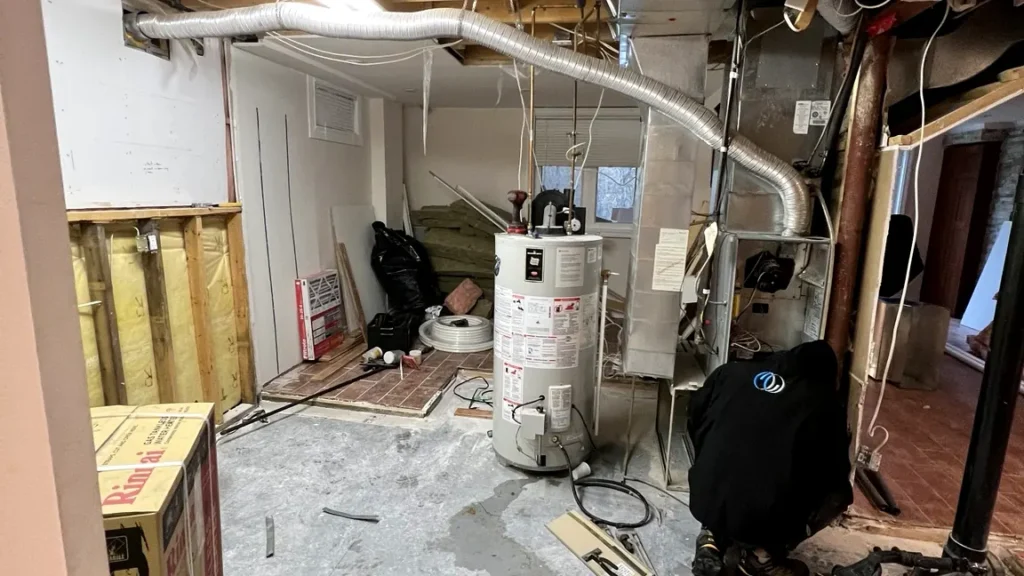
Many homeowners expect basement renovations to begin with framing and drywall. However, older basements often require significant demolition work before proper construction can begin.
In many homes, contractors may need to remove:
- Old flooring
- Damaged drywall
- Existing framing
- Concrete sections
- Outdated plumbing
- Moisture-damaged materials
- Unsafe previous renovations
This stage is important because hidden problems are often discovered only after demolition begins.
Common Hidden Problems Found During Demolition
| Hidden Problem | Why It Matters |
|---|---|
| Moisture behind walls | Mold and air quality concerns |
| Old plumbing | Future leakage risk |
| Poor insulation | Energy and comfort problems |
| Improper framing | Structural and code concerns |
| Low ceiling structure | Layout limitations |
| Previous DIY work | Safety and permit issues |
Many older Toronto basements contain hidden conditions homeowners cannot see until materials are removed.
What Happens Before a Basement Looks Finished
Most homeowners only see the final result after construction is complete. However, some of the most important work happens during the rough construction stage.
At this stage, contractors are coordinating:
- HVAC systems
- Plumbing rough-ins
- Electrical wiring
- Framing
- Ceiling planning
- Mechanical access
- Pot light layout
- Drainage work
Because all systems connect together, proper planning at this stage is extremely important.
Why Rough-In Planning Matters
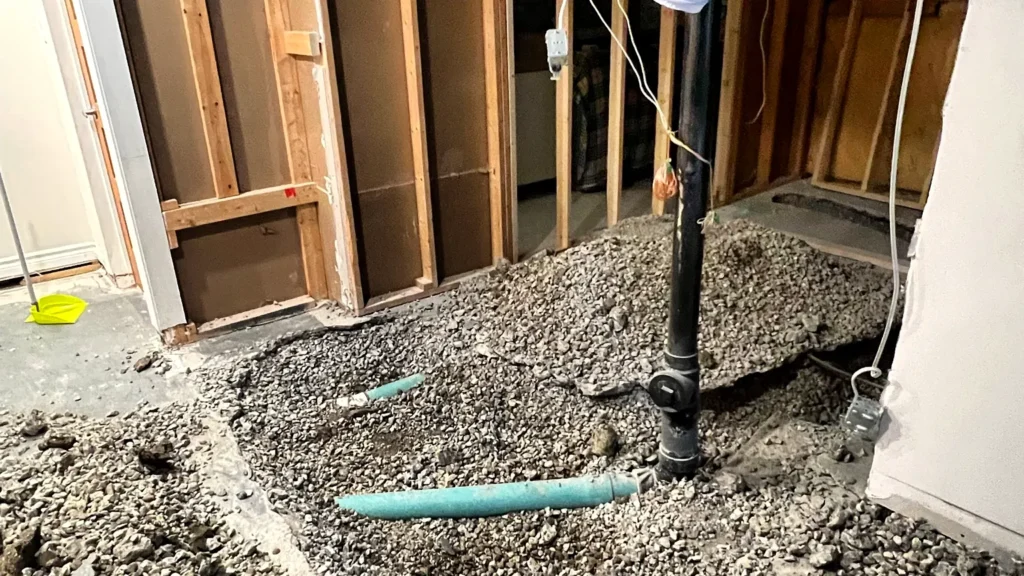
Poor rough-in planning can lead to expensive problems later.
Common Rough-In Problems
| Problem | Possible Result |
|---|---|
| Incorrect duct placement | Lower finished ceilings |
| Poor plumbing routing | Expensive rework |
| Weak soundproofing | Noise complaints |
| Bad layout planning | Smaller usable rooms |
| Limited mechanical access | Future maintenance problems |
Once drywall and flooring are installed, changes become much more expensive.
Why HVAC and Mechanical Planning Matter
In many older Toronto homes, HVAC systems become one of the biggest basement design challenges.
Large ductwork, beams, plumbing lines, and furnace layouts can significantly affect basement ceiling height and room layout.
Common HVAC Challenges
| Existing Condition | Possible Impact |
|---|---|
| Large ductwork | Lower finished ceiling |
| Poor return air | Cold basement temperatures |
| Older furnace | HVAC redesign required |
| Weak airflow | Comfort issues |
| Tight mechanical rooms | Layout limitations |
Many homeowners are surprised to learn that HVAC planning can affect the basement layout just as much as flooring or drywall.
Why HVAC Is So Important in Legal Basement Apartments
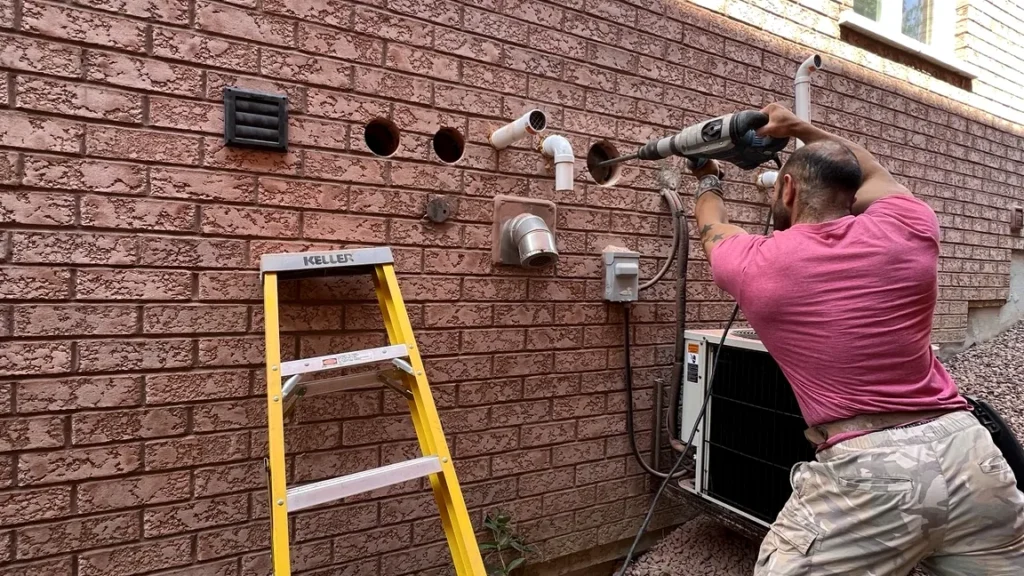
HVAC is not only about heating and cooling. It also affects:
- Ventilation
- Air quality
- Humidity
- Comfort
- Tenant satisfaction
Poor HVAC design may lead to:
| HVAC Problem | Possible Result |
|---|---|
| Poor ventilation | Stale air |
| Weak airflow | Cold rooms |
| No return air | Uneven temperatures |
| Excess humidity | Moisture problems |
| Limited fresh air | Poor indoor air quality |
Because of this, many legal basement apartments require HVAC upgrades before construction is complete.
What Homeowners Do Not Realize About Basement Plumbing Work
One of the most disruptive parts of many basement renovations happens underneath the concrete floor.
Many homeowners are surprised when sections of the slab must be removed before plumbing rough-ins can begin.
This work is commonly required when adding:
- Basement bathrooms
- Kitchens
- Laundry areas
- New drains
- Basement apartment plumbing
Real Example: Basement Plumbing Rough-In
The image above shows a basement during the plumbing rough-in stage after sections of concrete were removed.
At this stage, contractors may install:
| Plumbing Work | Why It Matters |
|---|---|
| New drain lines | Required for bathrooms |
| Shower drains | Proper water drainage |
| Toilet rough-ins | Future bathroom connection |
| Laundry plumbing | Utility setup |
| Venting systems | Airflow and drainage balance |
| Underground piping | Long-term performance |
Because plumbing systems are hidden under the slab, homeowners often underestimate how much work happens before the floor is restored.
Why Separate Entrances Matter in Basement Apartments
One of the largest upgrades in many legal basement apartment projects is adding a separate entrance.
A separate entrance can improve:
- Privacy
- Tenant access
- Rental appeal
- Safety
- Property functionality
However, separate entrance construction is often more complicated than homeowners expect.
In many projects, contractors may need to coordinate:
- Foundation modifications
- Exterior drainage
- HVAC vent locations
- Waterproofing
- Structural work
- Grading corrections
- Concrete work
Because of this, exterior basement work should always be planned carefully before construction begins.
Can an Existing Basement Be Legalized?
Many Toronto homeowners already have a finished basement. However, the basement may not be legal for rental use.
This leads to one of the most common homeowner questions:
Can I legalize my existing basement apartment?
In many cases, yes. However, the answer depends on the current condition of the basement.
Areas That Usually Need Review
| Area | Why It Matters |
|---|---|
| Ceiling height | Legal use and comfort |
| HVAC system | Heating and ventilation |
| Fire separation | Safety requirement |
| Electrical | Load capacity and safety |
| Plumbing | Kitchen and bathroom function |
| Egress windows | Emergency exit |
| Moisture control | Prevents future damage |
| Layout | Functionality and rental appeal |
Some basements only require minor upgrades. Meanwhile, others may require major reconstruction work.
Legal Basement vs Non-Legal Basement
| Item | Legal Basement | Non-Legal Basement |
|---|---|---|
| Permit | Usually required | Often missing |
| Inspection | City reviewed | Not formally reviewed |
| Fire safety | Addressed | May be unsafe |
| HVAC | Properly reviewed | May be inadequate |
| Insurance concerns | Lower | Higher |
| Tenant risk | Lower | Higher |
| Resale appeal | Better | Less predictable |
A non-legal basement may still look modern. However, hidden risks are often related to safety, insurance, inspections, and future tenant complaints.
Basement Waterproofing Matters More Than Most Homeowners Think
One of the biggest mistakes homeowners make is finishing a basement before solving moisture problems.
A basement may look beautiful on the surface while hidden moisture slowly damages:
- Flooring
- Drywall
- Framing
- Insulation
- Paint
- Air quality
Common Signs of Basement Moisture Problems
| Sign | Possible Concern |
|---|---|
| Musty smell | Moisture or poor ventilation |
| Water stains | Previous leakage |
| White powder on concrete | Efflorescence |
| Mold spots | Air quality concern |
| Warped flooring | Moisture under flooring |
| Damp feeling | Humidity problems |
Before spending money on finishes, the source of moisture should always be reviewed carefully.
From Unfinished Basement to Finished Living Space
Many homeowners only imagine the final result of a basement renovation. However, before the basement looks complete, contractors may spend weeks coordinating plumbing, HVAC, electrical work, framing, inspections, and finishing details.
Finished Basement Bathroom Example
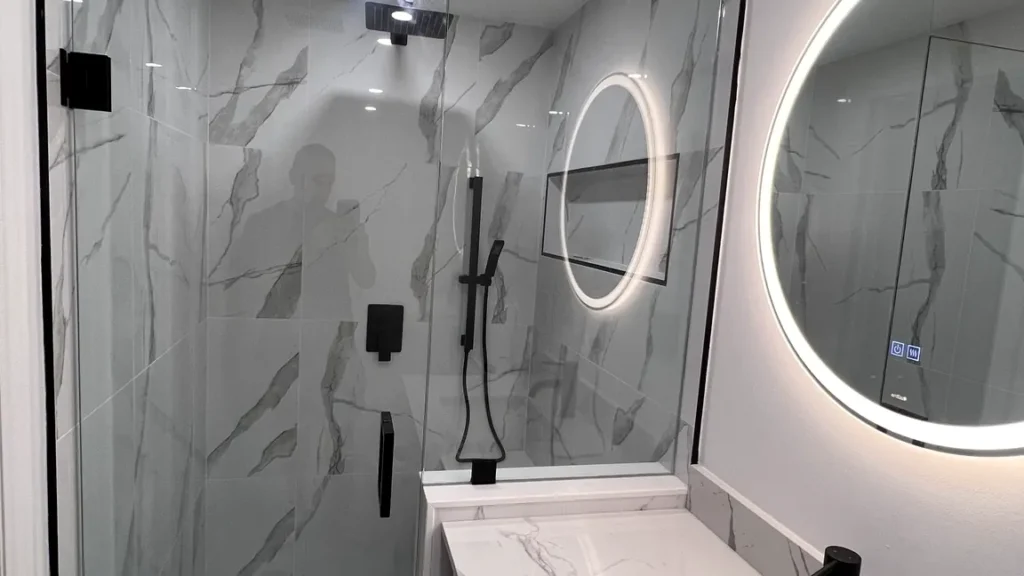
A properly designed basement bathroom can make a major difference in both comfort and rental appeal.
Features That Improve Basement Bathrooms
| Feature | Why Homeowners Like It |
|---|---|
| Glass shower enclosure | Makes smaller bathrooms feel larger |
| Large format tile | Cleaner and more modern appearance |
| LED mirror lighting | Brighter and cleaner space |
| Built-in shower niche | Better functionality |
| Matte black fixtures | Modern design trend |
Finished Basement Kitchen and Living Area
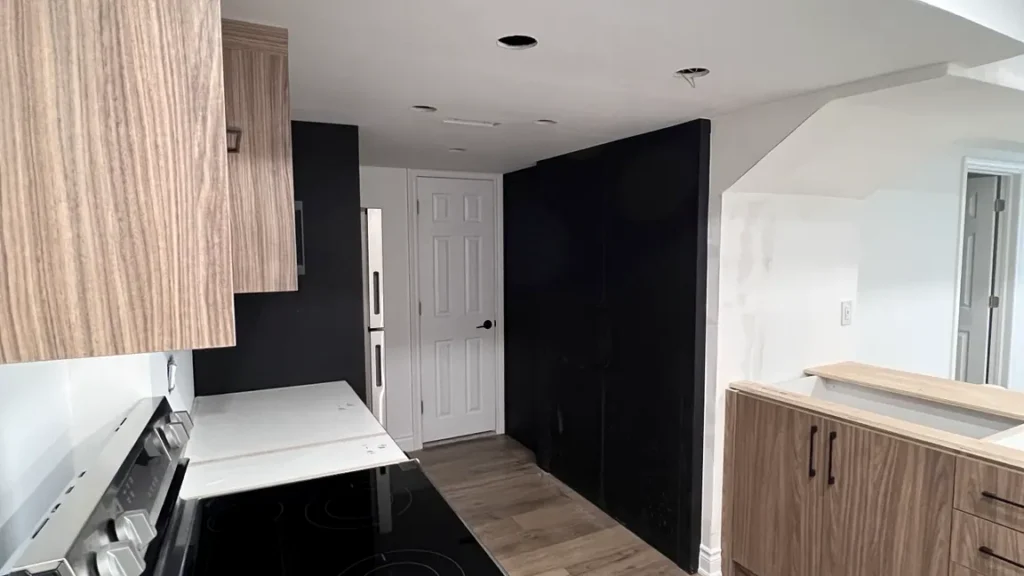
A finished basement apartment should feel comfortable, functional, and connected to the rest of the home.
Features That Improve Basement Comfort
| Feature | Benefit |
|---|---|
| Light flooring | Makes basement feel brighter |
| Pot lights | Cleaner ceiling appearance |
| Open layout | Better flow and usability |
| Neutral colours | More open feeling |
| Better ventilation | Improved comfort |
| Soundproofing | Reduces noise transfer |
In many Toronto basements, ceiling height and natural light are limited. Therefore, lighting and layout planning become extremely important.
Basement Rental Income in Toronto & the GTA
Many homeowners renovate their basement mainly for rental income.
Rental rates depend on:
- Location
- Number of bedrooms
- Parking
- Separate entrance
- Ceiling height
- Finishes
- Whether the basement is legal
Estimated Basement Apartment Rental Income
| Basement Type | Estimated Monthly Rent |
|---|---|
| Studio Basement | $1,400 – $1,900 |
| 1 Bedroom Basement Apartment | $1,700 – $2,300 |
| 2 Bedroom Legal Basement | $2,100 – $3,000+ |
Rental values vary between Toronto, Richmond Hill, Vaughan, Markham, Aurora, Newmarket, and surrounding GTA cities.
Basement ROI Example
Many homeowners ask:
“How long does it take to recover the renovation cost?”
Here is a simple planning example.
| Renovation Cost | Monthly Rent | Rough Payback Period |
|---|---|---|
| $80,000 | $1,800/month | About 3.7 years |
| $100,000 | $2,200/month | About 3.8 years |
| $120,000 | $2,500/month | About 4 years |
This is only a rough planning example before repairs, taxes, vacancy, financing, insurance, and maintenance costs.
Common Basement Renovation Mistakes
| Mistake | Why It Becomes Expensive |
|---|---|
| Ignoring moisture issues | Can damage new finishes |
| Skipping permits | Creates legal concerns |
| Poor HVAC planning | Basement feels cold |
| Weak soundproofing | Noise complaints |
| Rushing drywall installation | Expensive future changes |
| Bad layout planning | Lower rental appeal |
| Choosing only the cheapest quote | Important scope may be missing |
Careful planning before construction begins usually saves homeowners significant stress and unexpected costs later.
Frequently Asked Questions
A basic basement renovation may start around $35,000 to $60,000. However, a legal basement apartment may cost significantly more depending on plumbing, HVAC upgrades, waterproofing, permits, and layout complexity.
In many cases, yes. However, the basement may require upgrades related to fire separation, HVAC, permits, egress windows, electrical systems, or ceiling height.
If the project involves plumbing, electrical work, structural changes, HVAC modifications, or a basement apartment, permits are usually required.
HVAC affects heating, airflow, ventilation, humidity, air quality, and overall comfort. Poor HVAC design may create cold or uncomfortable basement conditions.
Not always. However, separate entrances usually improve privacy, rental appeal, and functionality.
Homeowners should review moisture issues, HVAC layout, plumbing, electrical capacity, ceiling height, window sizes, fire separation, and permit requirements before construction starts.
Planning a Basement Renovation in Toronto or the GTA?
Whether you are finishing your basement for extra living space or creating a legal basement apartment for rental income, proper planning is extremely important. Basement renovations often involve permits, HVAC upgrades, plumbing rough-ins, waterproofing, ceiling planning, and layout coordination.
Explore Renotec’s main pages below to learn more about basement renovation services, pricing, process, and how to contact our team.